Zero to 345 in one campaign
The cohort: 3,115 people, none of whom had ever reported.
- Before: 0 reports from these 3,115 people, ever
- After: 345 reported for the first time
It took 3 nudges over 4 weeks and 1 reporting simulation, run 19–25 August 2026 and rebuilt from a real phishing email seen at the organisation.
The problem: a reporting gap, not a susceptibility gap
These 3,115 people were not careless. They simply never told anyone.
Here's how the cohort compared with the CybSafe benchmark:
- Clicked: 6% for the cohort, against a CybSafe benchmark of 14%
- Phished: 3% for the cohort, against a CybSafe benchmark of 5%
- Reported: 12% for the cohort, against a CybSafe benchmark of 34%
PHISH counts first reports per person, so the security team can name these 345 rather than infer them from an average.
What they did
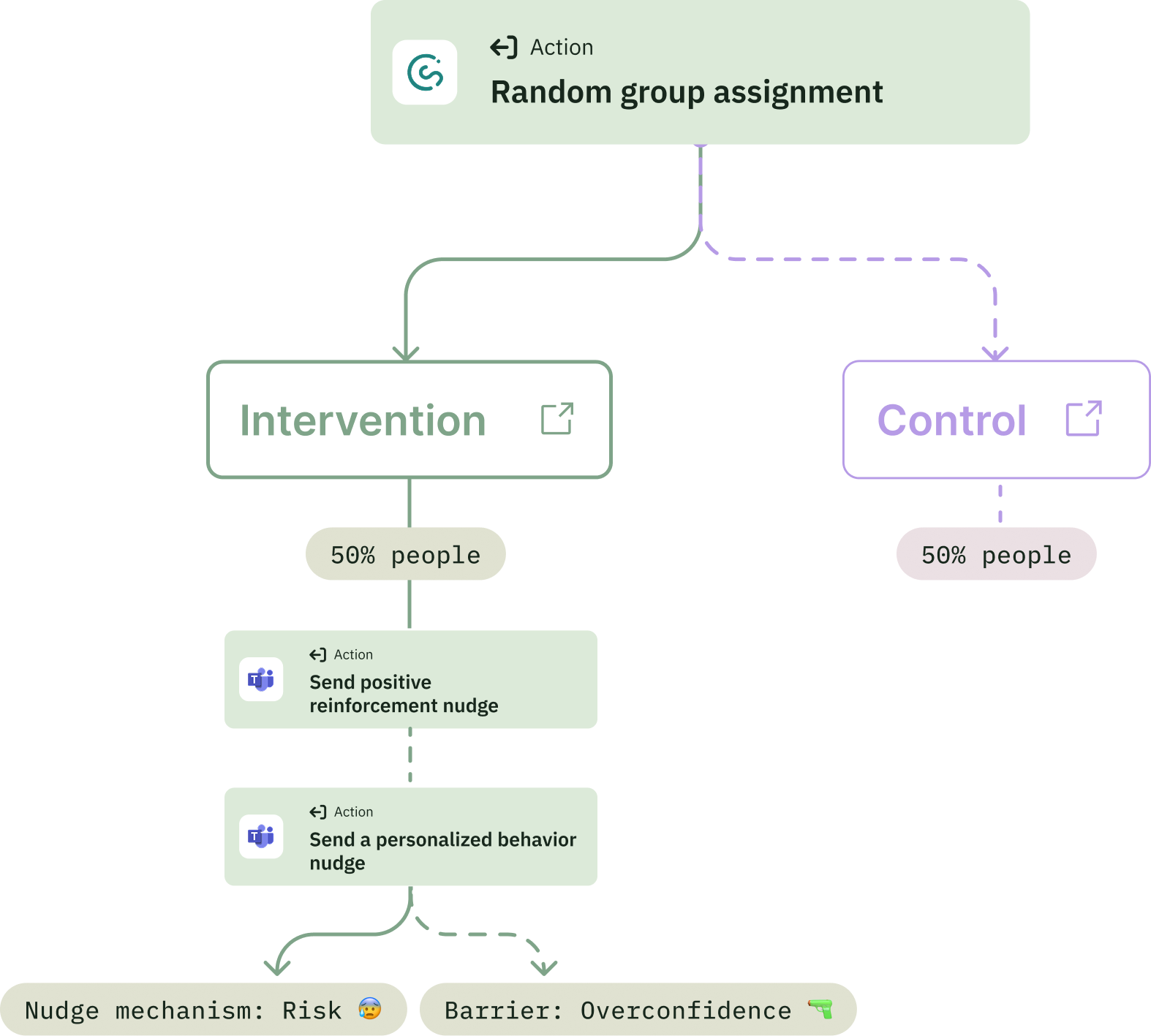
- Used PHISH to identify every person with no recorded phishing report
- Split them into an intervention arm of 2,807 and a control arm of 308
- Sent the intervention arm three nudges over four weeks, through Teams and email
- Ran one reporting simulation to the whole cohort
The result
345 people who had never reported a phishing simulation have now done it once.
That is approximately 11% of the cohort, every one of them from a lifetime record of zero, and every one of them named in PHISH.
Source: CybSafe PHISH, August 2026 Phishing Simulation. Cohort: 3,115 people with no previously recorded phishing report. First-time reporter = a person with no prior recorded report who reported this simulation.

345
first-time reporters in one campaign
0
reports from these 3,115 people, ever, before the campaign
~11%
of the cohort reported for the first time
3
nudges over four weeks, through Teams and email
1
reporting simulation to the whole cohort